

It Starts in the Shampoo Bowl
Most people think the styling chair is where the magic happens, but the foundation is laid at the shampoo bowl. A trained stylist shampoos in two passes: the first removes surface buildup, and the second actually cleanses the scalp. Each pass involves deliberate circular massage with the fingertips — not nails — using consistent pressure across the entire scalp rather than a concentrated scrub at the crown.
Water temperature matters too. Stylists typically use warm water to open the cuticle during cleansing, then finish the conditioner rinse with cooler water to help the cuticle contract and lie flat. That final cool rinse is one of the most commonly skipped steps at home, and it has a measurable impact on how much shine and smoothness carry through to the finished style.
Scalp health shapes the quality of every strand that grows from it — which is why investing attention at the wash stage pays dividends throughout the rest of your routine.
Use the Cool Rinse Every Time
After conditioning, take 15–20 seconds to rinse with the coolest water you can tolerate. This simple step helps seal the hair's cuticle layer, reducing frizz and boosting shine before you even reach for a dryer. It's one of the most consistent habits shared by professional stylists.
The Real Role of Tools and Tension
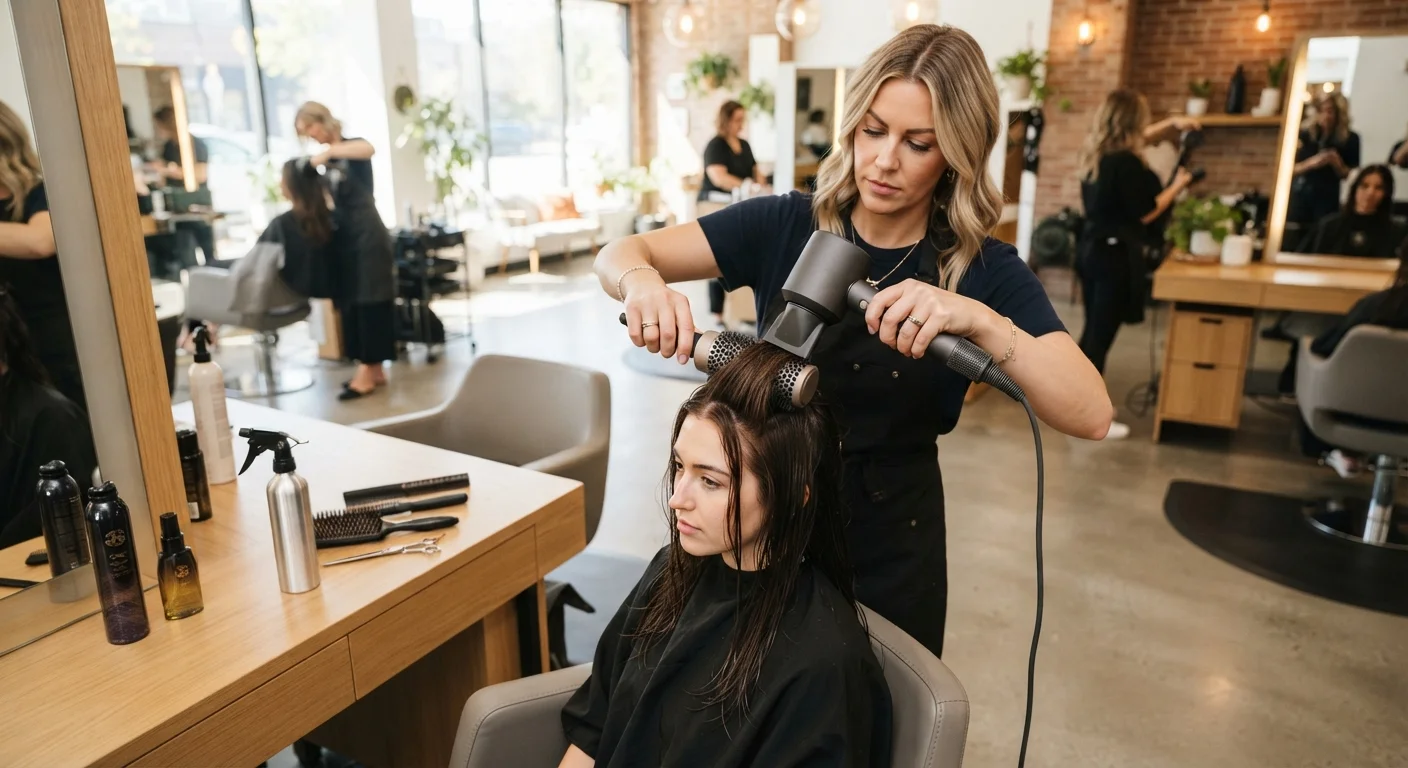
Salon stylists work with tension — holding each section taut while applying heat and airflow — which is the primary reason a blowout looks so much smoother than what most people achieve at home. Tension keeps the cuticle aligned and prevents the frizz that forms when hair dries in a disordered pattern.
A round brush is the most underutilized tool in home hair care. When used correctly — wrapping each section around the barrel while directing the dryer's airflow down the shaft — it smooths the cuticle, builds volume at the root, and creates a bend or straightness that holds significantly longer than flat-iron work alone. The technique requires practice and both hands working in coordination, which is why it feels awkward at first.
~70%
Of styling outcome attributed to technique
Hair care educators and professional stylists widely cite technique — sectioning, tension, and heat direction — as accounting for the majority of styling outcomes, outweighing product selection.
2 passes
Recommended shampoo applications per wash
The two-shampoo method — one pass to remove buildup, one to cleanse — is standard practice in professional salon settings and is taught in cosmetology training programs across the US.
Sectioning is equally important. Stylists clip hair into manageable sections and work through them methodically, ensuring each portion is fully dried before moving on. Working in large, unsectioned layers means some areas never fully dry under tension, which causes unevenness in the final result.
Product Timing and Application Technique
When you apply product matters as much as what you apply. Most leave-in treatments, creams, and heat protectants are formulated to be used on damp hair — not dripping wet. Applying them to soaking hair dilutes the formula and makes even distribution difficult. Stylists towel-blot or diffuse briefly before applying products, ensuring the formula sits on the hair rather than running off.
Distribution technique also differs. Professionals emulsify product between their palms before applying, then work through sections in a consistent direction — usually root to tip — rather than scrunching or piling product on top. This keeps the cuticle oriented in the same direction, which is what creates that smooth, reflective finish.
Understanding how your specific hair responds to products is foundational to making any technique work. Porosity and density determine how your hair absorbs and holds products, which means a technique that works for fine, low-porosity hair may not translate to coarser or high-porosity strands.
Not All Hair Responds the Same Way
Blow-drying techniques designed for straight or wavy hair may disrupt the curl pattern of naturally curly or coily hair types. If your hair falls in the curly or coily range, diffusing — rather than round-brush drying — is generally considered more appropriate for preserving your natural texture. Consult a stylist experienced with your specific curl pattern for personalized guidance.
Bridging the Gap at Home
Replicating salon results at home doesn't require professional-grade product purchases — it requires shifting focus to process. A few consistent habits produce the most noticeable improvements: finishing every conditioner rinse with cooler water, working in smaller sections when blow-drying, and allowing each section to cool before releasing it from the brush.
The cool shot button on your dryer is one of the most effective and underused features available. After styling each section with heat, a blast of cool air sets the shape by contracting the cuticle while the style is still in place. Skipping it is one of the most common reasons blowouts fall flat within hours.
If time is a real constraint, a targeted approach still beats rushing through the full process. Even a simplified routine can deliver polished results when the foundational techniques — proper rinsing, damp-hair product application, and sectioned drying — are in place. Technique, not time, is the variable that matters most.
Frequently Asked Questions
Stylists use a deliberate scalp massage technique with consistent pressure, which helps lift buildup and stimulate blood flow more effectively than a quick self-wash. They also rinse with cooler water at the end to help seal the cuticle, which contributes to shine and smoothness.
Professional products can differ in formulation, but technique accounts for far more of the result than product quality alone. Many stylists emphasize that even salon-grade products underperform when applied without proper sectioning, timing, or heat control.
The key is blow-drying with a round brush while the hair is damp — not wet — and directing airflow downward along the shaft to smooth the cuticle. Lifting the root section with the brush while applying heat creates volume that flat-ironing afterward cannot replicate.
Flat results are often caused by finishing on high heat without a cool shot to set the style, or by applying too much product to overly wet hair. Allowing each section to cool fully before moving to the next helps the shape hold longer.
Partial air-drying until hair is damp — roughly 60–70% dry — before using heat is a common technique among stylists. Starting on soaking wet hair requires more heat exposure time, which can increase stress on the hair shaft.
The content on this site is for informational purposes only and is not a substitute for professional advice. Always consult a qualified professional for guidance specific to your situation.