

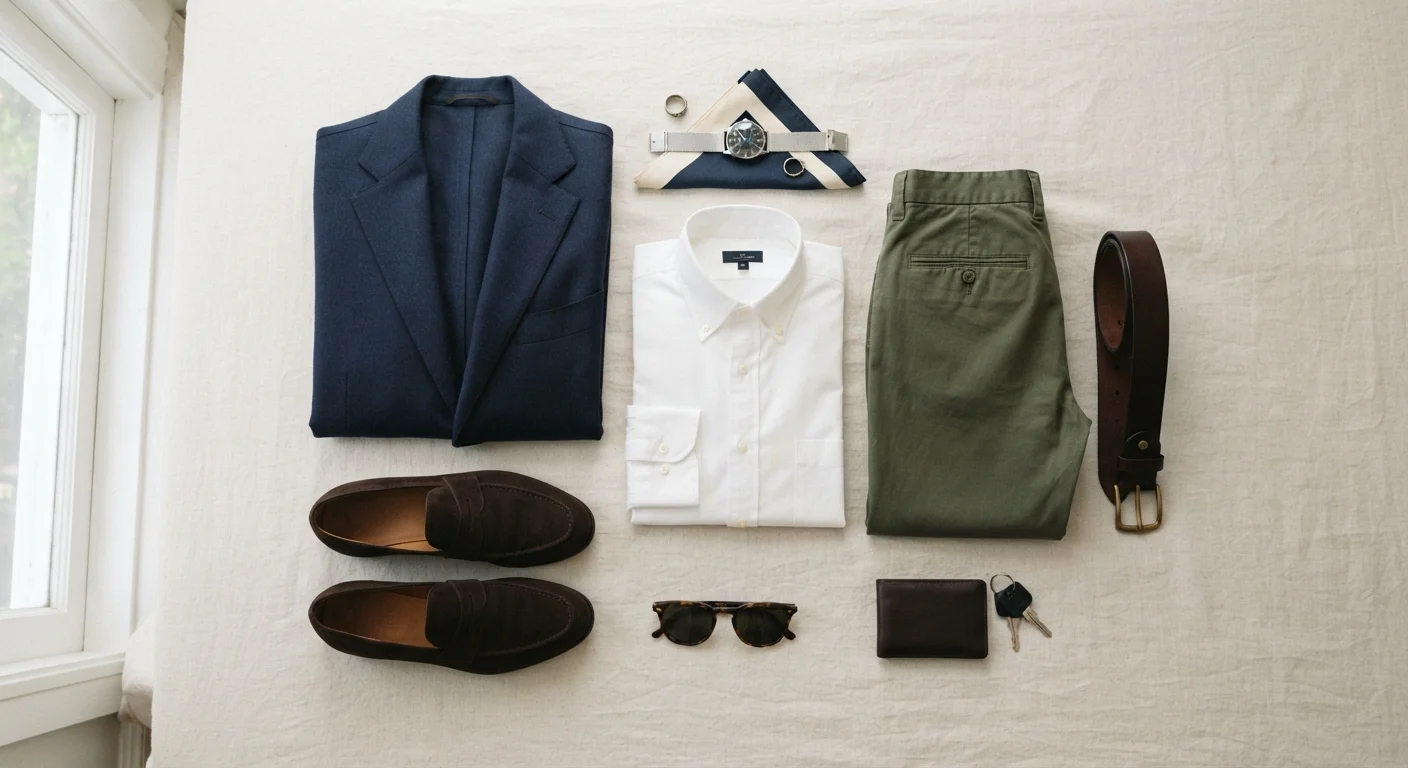
Why Dress Codes Still Matter — and Why They're Confusing
Dress codes haven't disappeared — they've multiplied and blurred. What one host calls "smart casual" another means as "business casual," and "cocktail attire" on a wedding invitation can feel like an entirely different language. The confusion is real, and showing up wrong — overdressed or noticeably underdressed — creates discomfort that's easy to avoid with a clear reference point.
This guide decodes the most common American dress codes from the bottom up: what each one actually expects, which garments qualify, and where the genuine flexibility lies. The goal isn't a rigid checklist but a reliable mental model you can apply to any invitation, office policy, or event.
| Number of common US dress codes | 5–6 recognized tiers |
| Most common office dress code | Business Casual |
| Most misunderstood code | Smart Casual |
| Key fit rule | Fit matters more than price |
| Black tie alternative (when 'optional') | Dark suit with tie |
The Core Dress Code Spectrum Explained
Think of American dress codes as a spectrum with five reliable anchor points.
Casual
The everyday baseline — but not a pass for sloppiness. Clean, well-fitting jeans, T-shirts without graphics or wear, sneakers in good condition, and casual sundresses all qualify. The distinguishing factor is intentionality: clothes that look chosen, not grabbed. For a sharper take on where the line falls, see what separates relaxed from visually undone.
Smart Casual
One step up from casual, smart casual blends ease with polish. Think dark, clean denim paired with a button-front shirt or blouse, loafers or clean leather sneakers, and simple accessories. Avoid athletic wear, flip-flops, and anything with visible distressing or branding.
Business Casual
The dominant office dress code in the US. Chinos or dress trousers, collared shirts, blouses, blazers, and closed-toe shoes form the foundation. Jeans may or may not be acceptable depending on workplace culture — when in doubt, opt for trousers. Ties are generally not expected.
Business Formal / Professional
Suits, tailored dresses or skirt suits, and polished leather shoes. Colors stay conservative — navy, charcoal, black, and soft neutrals. This code signals that appearance is being evaluated alongside your presence — interviews, board presentations, and formal client settings call for it. If you're preparing for an interview without a suit, practical strategies exist for pulling together a polished look from what you already own.
Cocktail / Semi-Formal
Evening-oriented and elevated. For women: knee-length or midi dresses, dressy separates, or tailored jumpsuits. For men: a dark suit with a tie, or dress trousers with a blazer. Avoid anything floor-length (that crosses into black tie) or overly casual.
Black Tie
The most formal civilian code. Men wear a tuxedo; women wear a formal gown or highly sophisticated evening separates. When the invitation reads "black tie optional," a dark suit is acceptable, but the expectation remains formal.
Smart Casual
A dress code that blends relaxed clothing with polished elements — clean denim or chinos paired with structured tops, for example. More elevated than everyday casual but without the formality of business attire.
Business Casual
The standard US office dress code requiring neat, professional clothing without requiring a full suit. Typically includes dress trousers or chinos, collared tops, blouses, and closed-toe shoes.
Cocktail Attire
An evening-appropriate, semi-formal dress code. Knee-length or midi dresses, dark suits, and dressy separates are appropriate. It sits between business formal and black tie on the formality spectrum.
Black Tie
The most formal civilian dress code in the US. Men are expected to wear a tuxedo; women wear formal gowns or highly refined evening attire. 'Black tie optional' permits a dark suit.
Fit
How well a garment conforms to the wearer's body proportions. Proper fit — neither too tight nor too loose — is widely considered the single most important factor in whether an outfit looks intentional and polished.
Building Outfits That Work Across Multiple Codes
The most practical wardrobe approach isn't buying for each dress code separately — it's identifying pieces that travel well across the spectrum. A well-fitted blazer, for instance, moves from smart casual (over dark jeans) to business casual (with trousers) to semi-formal (with dressy separates). Neutral-toned trousers, quality leather shoes, and structured blouses or Oxford shirts operate similarly.
Fit is the single factor that most determines whether an outfit reads as intentional. A well-fitted moderately priced garment consistently reads more polished than an expensive piece that doesn't fit the wearer's body. For guidance on applying this across different silhouettes, see what body-type dressing advice gets right and where it oversimplifies.
Pattern and color choices also affect perceived formality. Solid, muted tones read more formally; bold prints lower formality. When introducing pattern into a dress-code outfit, understanding when pattern mixing works prevents misreads. For reliable daily outfit combinations that take the guesswork out of getting dressed, outfit formulas grounded in versatile pairings offer a repeatable starting point.
When the Dress Code Is Unclear
If an invitation doesn't specify a dress code, use the setting and time of day as your guide. Daytime outdoor events lean casual to smart casual; evening events at restaurants or venues default to smart casual at minimum. When genuinely uncertain, it's acceptable to ask the host — most people appreciate the consideration.
The content on this site is for informational purposes only and is not a substitute for professional advice. Always consult a qualified professional for guidance specific to your situation.